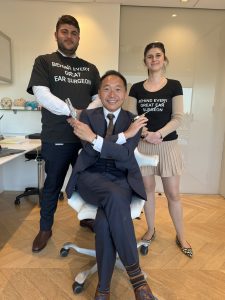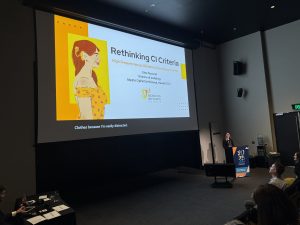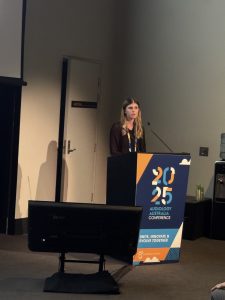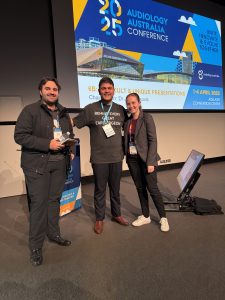
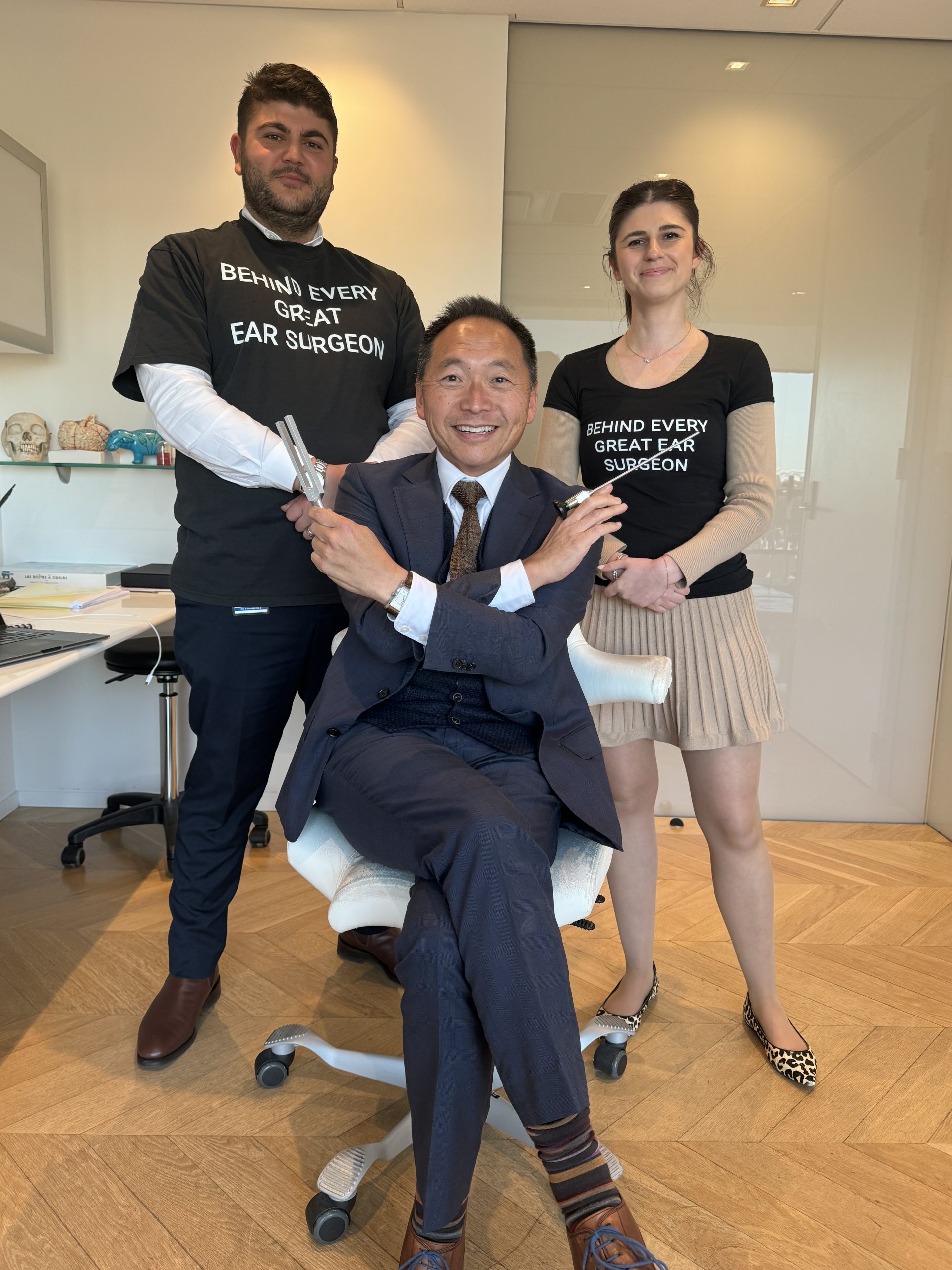
Dr Phillip Chang, Mo Helou and Dina Mavris presented at the Audiology Australia National Conference in Adelaide on joined-up implant care, vestibular conditions and the importance of high frequencies.
In April 2025, three members of our team presented at the Audiology Australia National Conference in Adelaide. Each covered a different part of adult hearing care, but they shared one theme: making sure people get the right care at the right time.
Joining up adult cochlear implant care: Dr Phillip Chang
Dr Chang spoke about how disjointed adult cochlear implant care can be. On the way to an implant, many adults see several different providers, often including a GP, a hearing aid audiologist, an ENT surgeon and an implant clinic. Without clear communication between them, patients can face:
- delays in being referred for an assessment
- mixed messages about whether an implant is right for them
- gaps in care after surgery
He made the case for a coordinated, multidisciplinary model, with clear referral pathways and regular communication between everyone involved, so that patients feel supported at every step.
Vestibular conditions and superior semicircular canal dehiscence: Mo Helou
Mo spoke about vestibular conditions, with a focus on superior semicircular canal dehiscence (SSCD). This is a condition where the bone covering one of the balance canals in the inner ear is thin or missing. Key points included:
- Unusual symptoms: people may experience dizziness triggered by loud sounds or pressure changes, hear their own voice, heartbeat or footsteps unusually loudly, or feel fullness in the ear.
- Easily missed: on a hearing test, SSCD can look like a conductive hearing loss and may be mistaken for other conditions such as otosclerosis.
- The value of vestibular testing: specialised balance tests, alongside imaging, help confirm the diagnosis and guide management.
Looking beyond the audiogram: Dina Mavris
Dina spoke about the importance of high-frequency hearing for people who may benefit from a cochlear implant but whose audiogram doesn’t meet traditional criteria.
- Traditional criteria can miss people. Candidacy guidelines often focus on the average hearing level across a few low and mid frequencies. Someone with fairly good low-frequency hearing but a steep high-frequency loss may not “qualify” on paper.
- High frequencies carry clarity. Many consonant sounds, such as s, f, th and sh, sit in the high frequencies. Without them, speech can sound loud enough but still be hard to understand, especially in background noise.
- Function matters as much as thresholds. Speech understanding with well-fitted hearing aids, and the day-to-day difficulties a person describes, are just as important as the audiogram when deciding who to refer.
Her message to audiologists: if a patient is struggling despite well-fitted hearing aids, refer them for an assessment, even if their audiogram doesn’t look severe enough.
Sharing what we’ve learnt
Thank you to Audiology Australia for the opportunity, and to everyone who came along, asked questions and shared their own experiences. We’re looking forward to continuing these conversations at future conferences.
Have a patient who’s struggling despite hearing aids? See our referral guidelines or contact us to discuss.